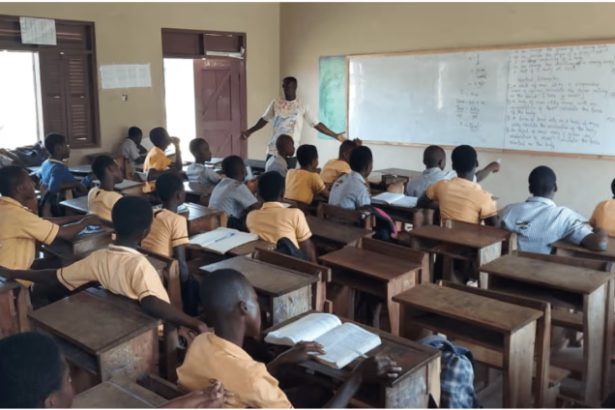
Public basic schools are expected to resume normal academic activities today, Monday, October 12, following the suspension of a nationwide strike by three pre-tertiary teacher unions over unpaid allowances and salary arrears.
The Ghana National Association of Teachers (GNAT), the National Association of Graduate Teachers (NAGRAT) and the Coalition of Concerned Teachers suspended the strike on Friday, October 9, after reaching an agreement with the Fair Wages and Salaries Commission (FWSC) on outstanding payments.
The unions began the industrial action on September 25, 2026, protesting delays in placing promoted teachers on their appropriate salary scales, as well as unpaid promotion allowances and arrears.
GNAT General Secretary Thomas Musah urged members to return to the classroom while discussions on outstanding grievances continued.
He said negotiations with the FWSC on promotion allowances, deprived-area allowances and arrears had been concluded.
NAGRAT President Jacob Anaba assured teachers that outstanding arrears would be paid, while calling on the public and the media to support the unions’ advocacy for improved conditions of service.
“We hope not to go to this length of industrial action again,” he said.
Meanwhile, the FWSC has outlined timelines for the payment of some outstanding allowances and arrears.
The commission’s Chief Executive Officer, Dr George Smith-Graham, said arrears relating to promotion and placement would be paid to 51,000 teachers by October 16, with the remaining payments expected to be completed by the end of October.
He said the government would announce the modalities for paying the deprived-area allowance in January 2027.
Negotiations on the complementary digital instruction support allowance have also been concluded, with payment expected in November 2026, while the continuous professional development allowance is expected to be paid in December 2026.
Dr Smith-Graham said negotiations on other outstanding issues would continue.
The return to the classroom follows engagements involving the unions, the Ministry of Labour, Jobs and Employment, the Council of State and the FWSC.