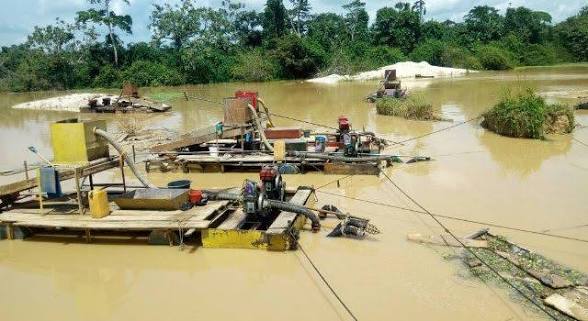
The National Anti-Illegal Mining Operations Secretariat (NAIMOS) has destroyed 1,970 chanfangs and 863 makeshift structures during 738 operations conducted against illegal mining between June 13 and September 30, 2026.
Director of Operations at NAIMOS, Colonel K.S. Appiah, disclosed this on Thursday, October 22, during a media briefing on the secretariat’s activities over the four-month period.
He said the operations covered approximately 50,662 kilometres and included reconnaissance missions, mobile and riverine patrols, raids, special operations and community engagement.
According to him, the operations formed part of an intelligence-led strategy to disrupt illegal mining networks and protect Ghana’s rivers and environmentally sensitive areas.
“Our approach focuses our efforts on conditions needed for lasting environmental security,” he said, stressing the importance of sustained monitoring and effective control of equipment used for illegal mining.
More Read

Colonel Appiah said the operations were designed to secure strategic watersheds and river systems, from their sources to their estuaries, while preventing illegal miners from returning to affected areas.
The joint operations covered several parts of the country, including the Western, Western North, Central, Eastern and Ashanti regions, as well as the Bono, Savannah and Northern operational areas.
Beyond the destruction of mining infrastructure, Colonel Appiah said NAIMOS task forces recovered 74 firearms and 551 rounds of ammunition during the period.
The teams also seized excavators, water pumps, vehicles and other equipment used to support illegal mining activities.
He said the seizures and destruction of mining infrastructure were intended to weaken the operational capacity of illegal miners and prevent them from resuming their activities.
The four-month period covered the tenure of Colonel Appiah, who assumed his current operational role on June 13.
NAIMOS has been conducting joint operations to disrupt illegal mining activities, with a focus on protecting water bodies and restoring environmental security in affected communities.