By Benjamin Makafui Attipoe, Sogakope
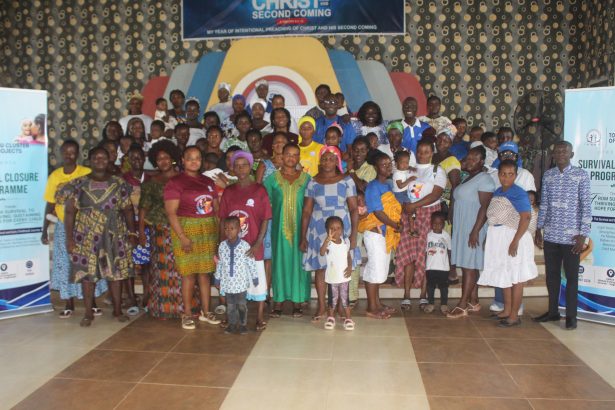
Compassion International, a child development organization, has ended its Tongu Cluster of Projects in the Central, South and North Tongu Districts as well as the Adaklu District of the Volta Region at an impressive ceremony at Sogakope in the South Tongu District. The eight-year Survival and Early Childhood Intervention programme in the beneficiary districts, supported 1,211 mothers, infants and caregivers across several communities in the Tongu and Adaklu areas.
The official closure ceremony, held at the Solution Chapel of the Global Evangelical Church (GEC) at Sogakope, was under the theme: ‘From Survival to Thriving: Sustaining Hope for Every Child’. It brought to a close the eight-year Maternal and Child Intervention Programme implemented by Compassion International, Ghana in the Tongu Cluster or the beneficiary project districts.
The Tongu Cluster of Compassion-assisted programme was implemented by Compassion International, Ghana in collaboration with the local churches and community stakeholders. It was designed among other things to reduce maternal, newborn and child mortality rates among the populace while improving access to essential health services during the critical first thousand (1,000) days of the child’s life.
Speaking at the closure ceremony, the Partnership Facilitator of Compassion International, Ghana, Mr. Richard Baku disclosed that the programme was launched in December 2017 in response to the persistent maternal and child health challenges, including poverty, malnutrition and limited access to quality healthcare among residents in the beneficiary project areas.
More Read

According to him, the intervention covered eight communities namely Mafi Dove, Volo, New Bakpa, Mafi Gidikpoe, Mafi Kumase, Mafi Anfoe and Mafi Zongo, using an integrated community-based approach in addition to combining healthcare delivery, nutrition support, caregiver education and child protection to achieve the needed results.
Mr. Baku said the programme, which began with 65 mothers and 55 babies, expanded over the years to reach 1,211 beneficiaries, a development which has impacted hundreds of children and their mothers in several families across the four districts. Mr Baku noted that beyond healthcare, the intervention also focused on economic empowerment, with 226 caregivers benefiting from apprenticeship and skills development to improve household incomes.
He called for sustained collaboration among churches, traditional authorities, the Ghana Health Service (GHS) and local government institutions to preserve the gains made, strengthen male involvement in childcare and also deepen community-based maternal health support systems.
The Central Tongu District Director of the GHS, Mr. Matthew Adam
underscored the need for a co-ordinated multi-sectoral response involving state institutions, Non-Governmental Organization (NGOs) and community stakeholders to address maternal and child health challenges affecting the people in the beneficiary districts and beyond.
He highlighted key concerns including teenage pregnancy, malnutrition, malaria and anaemia among pregnant women as well as poor health-seeking behaviour and limited access to quality healthcare services which continue to militate against the provision of quality healthcare delivery to clients in these areas.
Mr. Adam stressed the importance of addressing what he described as the ‘four delays’ , that is delay in seeking care and transport, availability of skilled staff as well as referral challenges, as critical to reducing maternal and neonatal deaths in the beneficiaries districts.
The District Director of Health Services (DDHS) also expressed appreciation to Compassion International, Ghana and its implementing partners for their contribution over the years to improve maternal and child health outcomes in the four project districts.
Delivering her remarks on behalf of Compassion International, Ghana, the Manager of Programme Support of the organization, Madam Rashidatu Iddrisah, reaffirmed the organisation’s commitment to holistic child development and strengthened community health systems.
She noted that the Survival and Early Childhood Intervention Programme was intentionally designed to safeguard mothers and children during the most vulnerable stages of life, particularly the first 1,000 days when interventions have the greatest impact on long-term health and development outcomes.
She explained that over the eight-year implementation period, the programme evolved beyond basic health support to include nutrition education, caregiver empowerment, child protection and economic strengthening initiatives.
Madam Iddrisah commended implementing partners, the local churches and health workers for their collaboration, describing the achievements recorded in the Tongu Cluster as a demonstration of what sustained partnerships can achieve for positive results. She further encouraged stakeholders to consolidate the gains made and ensure continuity of best practices as the programme transitions into its next phase of support.
In her goodwill message, the Queen Mother of Mafi Adidome, Mama Drapey III, emphasized that maternal health and healthy living remain fundamental to building strong families and a healthier nation. She therefore underscored the importance of quality prenatal care, skilled delivery and comprehensive postnatal support within the first six weeks of childbirth to prevent complications and safeguard the wellbeing of both the mother and child.
Mama Drapey III advocated the wider adoption of family planning to enable couples to make informed decisions on child spacing and its attendant proper care. The Queen Mother also highlighted the need for healthy lifestyle practices, including balanced nutrition, regular physical activity, abstinence from alcohol, tobacco and illicit drugs as well as adequate rest and stress management to promote optimal maternal and fetal health practices.
Mama Drapey III called on parents, health professionals, traditional authorities and development partners to sustain and build upon the gains so far achieved by the project in the Tongu Cluster. She expressed gratitude to implementing partners for their support and appealed for renewed commitment to secure a safer and healthier future for children and generations yet unborn.
Other speakers at the event included Rev. Pater Onasis from the Mafi-Kumase Child and Youth Development Centre (CYDC) and Rev. Israel Ahalie from Mafi Adidome CYDC . They both lauded the project initiative of Compassion International, Ghana and stressed the need for the beneficiaries to help sustain the achievements chalked by the programme by not reversing to the old situation they were in.
A former Project Director of the Mafi-Dove CYDC and Chairperson of the occasion, Madam Esinam Agbador described the intervention as transformative, noting that it had strengthened maternal healthcare systems and also ensured improved household resilience.
She noted that the initiative had contributed to safer pregnancies, improved delivery outcomes and enhanced child development, adding that its impact would continue beyond its formal closure. ‘The end of the survival intervention does not signify the end of the support for beneficiaries but rather a transition into a more holistic phase of child development’, Madam Agbador emphasized.
Mrs. Agbador commended caregivers, health professionals, churches and community volunteers for their commitment to the success stories of the Tongu Cluster, urging continued engagement in successor programmes.
Compassion International is currently serving 2.3 million children across the world with Ghana not being an exception. The ceremony brought together traditional leaders, the clergy, GHS officials, local government representatives, caregivers, community volunteers and project staff, marking both a celebration of achievements and a call to sustain the gains made over the past eight (8) years.