……As incumbents fall, others survive
The governing National Democratic Congress (NDC) has witnessed a mixture of political upsets, narrow victories, fierce internal competition and renewed mandates for established party leaders following its regional executive elections held across the country on Saturday, November 14, 2026.
The elections, which form part of the party’s preparations for the 2028 presidential and parliamentary elections, have so far produced regional chairmen in 13 of Ghana’s 16 regions, with results from the Central, Oti and Savannah regions still pending at the time of going to press yesterday.
Some incumbent regional chairmen successfully defended their positions, while others suffered unexpected defeats, signalling changing political dynamics within the governing party nearly two years after its return to power under President John Dramani Mahama.
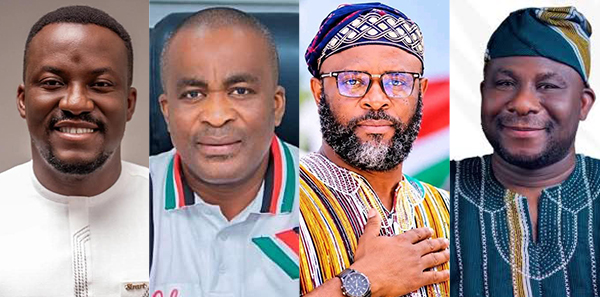
Perhaps the biggest casualty was the Greater Accra Regional Chairman, Emmanuel Nii Ashie Moore, who suffered a crushing defeat at the hands of Benjamin Danso, a former Krowor Constituency Chairman, in a contest held at Teshie-Nungua, despite having expressed confidence that delegates would reward his leadership and contributions to the party’s electoral fortunes.
Another significant upset occurred in the Upper West Region, where Alhaji Alhassan Adam, popularly known as Randy, staged a political comeback by defeating incumbent Regional Chairman Abdul Nasir Saani Bunas, four years after losing to him in the party’s 2022 regional elections.
However, other prominent regional executives, including Dr Mark Oliver Kevor in the Eastern Region, Nana Kojo Toku in the Western Region, Augustus Andrews, popularly known as Nana Kwasi, in the Ashanti Region, and Kwadwo Nyamekye-Marfo in the Bono Region, survived the internal contests to secure fresh mandates.
In the Northern Region, Godfred Apasinaba Wumbei, popularly known as Yellowman, emerged victorious in a keenly contested chairmanship election overshadowed by allegations that pickup vehicles had been distributed to constituencies shortly before voting.
Meanwhile, the Central Region recorded one of the most controversial outcomes, with incumbent Chairman Dr Richard Kofi Asiedu demanding a recount after provisional figures placed him just five votes behind his challenger, lawyer Obeng Inkoom.
The developments have exposed the intensity of internal competition within the NDC, raising questions about the influence of incumbency, grassroots mobilisation, internal alliances and the ability of the newly elected executives to unite their respective regions ahead of the next general elections.
They have also demonstrated that holding political office or enjoying the advantages of incumbency does not necessarily guarantee survival in the governing party’s internal elections.
The defeat of Emmanuel Nii Ashie Moore in the Greater Accra Region represents one of the most significant political upsets of Saturday’s elections, four years after he controversially unseated the late Ade Coker to become Regional Chairman.
Mr Ashie Moore, who had sought another four-year mandate, entered the contest expressing confidence that delegates would endorse his stewardship of the party in the region.
However, Benjamin Danso, who campaigned on a platform of service, integrity, grassroots mobilisation and stronger constituency structures, emerged victorious.
Mr Danso secured 515 votes, defeating three other contenders. Michael Tetteh Kwetey followed with 295 votes, while Mr Ashie Moore managed 161 votes and Ibrahim Jajah secured 63.
The results placed the incumbent chairman third, a particularly disappointing outcome for a politician who had hoped to retain control of the party’s structures in one of Ghana’s most politically influential regions.
Mr Danso’s victory margin over Mr Ashie Moore was 354 votes, indicating a decisive preference for a change in leadership among delegates.
Ahead of the elections, Mr Danso pledged to strengthen the NDC’s organisational machinery across all 34 constituencies in Greater Accra, emphasising unity, discipline and grassroots participation.
His victory brings a change in leadership in a region whose substantial voting population, competitive parliamentary constituencies and changing political loyalties make it particularly important to both the NDC and the opposition New Patriotic Party (NPP).
For the newly elected chairman, the immediate challenge will be to reconcile competing factions and ensure that supporters of the defeated candidates remain actively involved in the party’s activities.
In the Greater Accra youth wing elections, Mohammed Abdul Muqmin Juda secured the Youth Organiser position with 103 votes, defeating his closest challenger, who obtained 26 votes.
The Upper West Region also witnessed a significant change in leadership after Alhaji Alhassan Adam, popularly known as Randy, defeated incumbent Regional Chairman Abdul Nasir Saani Bunas.
Mr Randy secured 196 votes, compared with Mr Bunas’s 164, while Sombawiere Samba Sankara placed third with 28 votes.
The result represents a reversal of political fortunes for Mr Randy, who lost to the incumbent in the 2022 regional executive elections.
His victory, secured by a margin of 32 votes, returns him to the centre of the party’s regional leadership and places responsibility on him to rebuild unity following the contest.
In the vice-chairmanship race, Abu Balifiam led with 144 votes, followed by Boniface Tienaa with 90.
Other contestants included Osman Nurulahi, who polled 48 votes; Alhaji Musah Issah, 40; Augustine Kumbuor, 35; Bukari Bayorbor, 16; and Zumakpeh Fidelis, 15.
Bere Alex led the regional secretary contest with 130 votes, followed by Samson Abu with 97, Edward K. Dery with 82, Nurideen Pelpuo Seidu with 63 and James Ziekye with 16.
The deputy secretary contest was particularly competitive, with Dr Angsongna B. Claudius polling 116 votes, narrowly ahead of Agbonor Sulemani Rufai, who secured 113.
Bukman N. Dawuda topped the regional organiser contest with 244 votes, while Rashid Bickson led the deputy organiser race with 120 votes.
Although the chairmanship result was reported as concluded, some of the other executive positions were awaiting formal confirmation.
In the Ashanti Region, incumbent Chairman Augustus Andrews, popularly known as Nana Kwasi, successfully defended his position against former Regional Organiser Isham Alhassan Yaw Bonsu.
Mr Andrews polled 814 votes against his opponent’s 622, securing a third term as Regional Chairman.
The victory gives him another four-year mandate to lead the NDC in the Ashanti Region, traditionally regarded as the NPP’s strongest electoral base.
The election was conducted under heightened security, with voting delayed until early afternoon before the exercise was eventually concluded.
Speaking after his victory, Mr Andrews pledged to consolidate the NDC’s parliamentary gains in the region and work towards securing additional seats in the 2028 elections.
“We’re not going to lose those seats. We are going to add more,” he declared.
He said the party would maintain and improve the strategies that contributed to its electoral gains in 2024, including the capture of three additional parliamentary seats.
“But you know how I do my things. I always keep silent, but I work underground,” he said.
Mr Andrews also promised to pursue reconciliation following the internal contest, stressing the importance of unity in preparing the party for the next general elections.
Referring to his reputation as “Asomdwehene”, meaning King of Peace, he assured supporters that he would work towards restoring harmony among competing factions.
His re-election is particularly significant because the NDC considers increasing its parliamentary representation and reducing the NPP’s presidential vote margins in the Ashanti Region essential to its long-term electoral prospects.
In the Western Region, Nana Kojo Toku survived a closely contested chairmanship election to retain his position.
Mr Toku secured 225 votes, narrowly defeating Samuel Kwame Borlu, who polled 209, while George Arthur finished third with 114 votes.
The 16-vote margin between the two leading candidates reflected the intensity of the contest and the divisions within the party’s regional electoral college.
His re-election followed a petition by the Apinto royal family, which had asked the NDC to prevent him from contesting on the grounds that he is a gazetted chief and that the party’s constitution prohibits chiefs from engaging in active party politics.
Despite the petition, Mr Toku participated in the election and emerged victorious.
In the other executive contests, Alhaji Iddrisu Mustapha was elected First Vice Chairman with 217 votes, while Daniel K. B. Eshun secured the Second Vice Chairman position with 119 votes.
Suleman Yahaya Anafo won the Deputy Secretary position with 165 votes, while Richard Ernest Kirk-Mensah was elected Communications Officer after polling 306 votes against Eric Kwaku Kyeremah’s 231.
Daniel Nketsiah secured the Deputy Communications Officer position with 238 votes, while Charles Adu-Fordjour won the Regional Organiser position with 312 votes.
Clifford Ayirebi Acquah was elected Deputy Organiser with 256 votes.
Other elected executives included Hajia Sadika Yakubu, Deputy Women Organiser; Abdul Hakeem Mahama, Youth Organiser; Jones Adom, Deputy Youth Organiser; and Mensah Kweku Emmanuel, Second Deputy Youth Organiser.
Hafiz Alasco won the Zongo Caucus Coordinator position with 311 votes, defeating Alhaji Abubakari Kamal, who secured 237.
Daniel Darlington Atitso was returned unopposed as Treasurer, Marian Plange-Kwofie as Deputy Treasurer and Gladys Egyin as Women Organiser.
George Dadzie Junior led the Secretary contest with 324 votes, although the available results did not explicitly identify the officially declared winner.
Mr Toku’s narrow victory presents him with the challenge of reconciling the competing camps while strengthening the party’s regional structures ahead of 2028.
In the Northern Region, Godfred Apasinaba Wumbei, popularly known as Yellowman, was elected Regional Chairman after securing 328 votes.
His closest challenger, Alhaji Tanko Maida, obtained 236 votes, while Abdul-Hamid Alhassan Gbewaa finished third with 27.
Mr Wumbei’s victory was, however, overshadowed by allegations that 18 pickup vehicles had been distributed to constituencies shortly before the elections.
According to reports attributed to Citi News, the vehicles were allegedly distributed on the night of Friday, November 13, with one pickup reportedly allocated to each of the 18 constituencies in the Northern Region.
Sources cited in the reports alleged that the distribution was intended to influence delegates in favour of Mr Wumbei.
The allegations have not been independently established, and no finding of electoral wrongdoing has been reported.
Nevertheless, the controversy has raised questions about the potential influence of financial resources, logistical support and material incentives in internal party elections.
Mr Wumbei now faces the task of consolidating his victory and addressing any lingering divisions arising from the contest.
In the Bono Region, Kwadwo Nyamekye-Marfo retained his position after securing an overwhelming victory.
He received 361 votes to 36 for his sole challenger, Justice Samuel Adjei, representing more than 90 per cent of the votes cast in the chairmanship contest.
The victory marks a departure from his previous two re-elections in 2018 and 2022, when he was returned unopposed.
Saturday’s contest was therefore the first time in those three electoral cycles that he had faced a challenger in his bid to retain the regional chairmanship.
His commanding victory suggests that he continues to enjoy substantial support among delegates in the region.
The result also strengthens his position within the party’s regional leadership as the NDC prepares for the next general elections.
In the Eastern Region, Ing. Dr Mark Oliver Kevor secured another mandate as Regional Chairman.
Before his re-election, Dr Kevor declared his intention to strengthen the party’s structures across constituencies and branches, with the ultimate objective of transforming the Eastern Region into a stronghold for the NDC.
“Our goal must be clear: to turn the Eastern Region green, constituency by constituency and branch by branch,” he stated.
He said his approach to party organisation would draw on lessons from his work with the late Dr Edward Omane Boamah, particularly the importance of data, discipline, strategy and attention to detail in modern political organisation.
His re-election gives him another opportunity to strengthen the party’s electoral machinery in a region traditionally considered one of the NPP’s strongest political bases.
In the Upper East Region, veteran NDC Regional Chairman Alhaji Bolnaba retained his position after defeating his challenger by a margin of 220 votes.
His victory extends a long period of regional leadership dating back to December 2005.
Having led the party in the region for more than two decades, Alhaji Bolnaba remains one of its longest-serving regional chairmen.
His re-election demonstrates delegates’ continued confidence in his leadership, even as other regions have seen calls for change.
In the Ahafo Region, Owusu Nkrumah Ababio emerged victorious in the regional chairmanship contest held at Nana Bosomprah Park in Goaso.
Mr Ababio secured 106 votes, defeating his closest challenger, Joseph Baradoe, who polled 94, while Ahmed Ali Awinbila received three votes.
The 12-vote margin reflected a competitive contest in which the winning candidate secured a relatively narrow advantage.
His election ushers in new leadership for the party in the region, with expectations that he will strengthen constituency structures and promote unity among members.
In the North East Region, former Member of Parliament for Yagaba, Abdul Rauf Tanko Ibrahim, was elected Regional Chairman after securing 146 votes.
He defeated Abdul-Razak Saaka, who obtained 59 votes, and John Campion Yenukwah, who polled 15.
His election places a former legislator at the head of the party’s regional structures as the NDC seeks to consolidate its political influence in the region.
In the other executive contests, John Bibirim topped the vice-chairmanship race with 100 votes, followed by Iddrisu Na-Yaw Abochi with 70 and Banabelsera Yusif Adam with 51.
Abdallah Abubakari won the Regional Secretary position with 114 votes, defeating Wundow Salifu Abraham Mangariba, who secured 94, and Timothy Konlan Nunifant, who polled 13.
Thomas B. Jayen led the Deputy Secretary contest with 95 votes, while Godfred Mayeem won the Organiser position with 124 votes.
Mohammed Akunloya was elected Deputy Organiser with 97 votes, and Ibrahim Rasheed led the Treasurer contest with 94.
Nurudini Abdul-Rahaman secured the Deputy Treasurer position with 136 votes, while A. Abdul Gafaru Mohammed won the Communications Officer contest with 108 votes.
Hamza Iddrisu Salifu led the Deputy Communications Officer contest with 70 votes, while Tahiru Rafiu secured the Zongo Caucus Coordinator position with 80 votes.
In the women’s wing contest, Sumaya Ligbi Salifu polled 14 votes, while Asana Yidana led the Deputy Women Organiser contest with six.
Kamil Dabri Ibrahim and Yussif Sulemana Saeed were listed as elected Deputy Youth Organisers after polling seven and five votes respectively.
The results reflect a broad restructuring of the party’s regional executive machinery, with both experienced politicians and emerging party organisers securing leadership positions.
While several regions successfully concluded their elections, the Central Region remained embroiled in controversy following a disputed chairmanship contest.
Provisional results placed lawyer Obeng Inkoom ahead with 372 votes, compared with 367 for incumbent Chairman Dr Richard Kofi Asiedu.
A third contestant, Ibrahim Mohammed, secured 16 votes.
The narrow five-vote difference prompted Dr Asiedu to demand a recount, reportedly triggering disagreements between supporters of the two leading candidates.
Reports indicated that members of the opposing camp resisted the request, resulting in heightened tension at the election venue.
Police officers subsequently formed a security cordon around the ballot boxes to safeguard the electoral materials while the dispute remained unresolved.
The development has placed the spotlight on the party’s internal electoral dispute-resolution mechanisms and the ability of election officials to address closely contested results without deepening divisions.
As of Sunday, November 15, the chairmanship result had not been formally declared, with the outcome dependent on the resolution of the recount dispute.
Saturday’s regional elections were conducted by the Electoral Commission, with personnel of the Ghana Police Service deployed to maintain security at the various voting centres. Delegates were required to vote in person, as proxy voting was not permitted under the electoral arrangements.
The party’s youth and women’s organisers and their deputies were elected at separate wing conferences, most of which took place on Friday, November 13.
The main regional conferences elected the remaining executives, including regional chairmen, vice-chairmen, secretaries, organisers, treasurers, communications officers and Zongo Caucus coordinators.
The electoral college included constituency executives, regional Members of Parliament, ministers, district chief executives and party elders.
The outcomes of the elections have underscored the changing balance of power within the governing party, with delegates demonstrating their willingness to replace established leaders while retaining others whose leadership they consider effective.
For the victorious candidates, the immediate priority will be to heal divisions created by the contests, strengthen constituency and branch structures, and mobilise supporters ahead of the 2028 general elections.
For the NDC’s national leadership, the challenge will be to ensure that the intense internal competition does not undermine party cohesion at a time when the governing party is seeking to consolidate its political gains and secure another mandate from the electorate.
Ultimately, the regional elections have shown that incumbency alone is no guarantee of political survival, with grassroots support, organisational strength and the confidence of delegates emerging as decisive factors in determining the party’s regional leadership.