….After BoG’s unconvincing explanation of Theodosia Okoh’s portrait on GH¢50 banknote
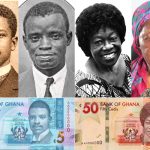
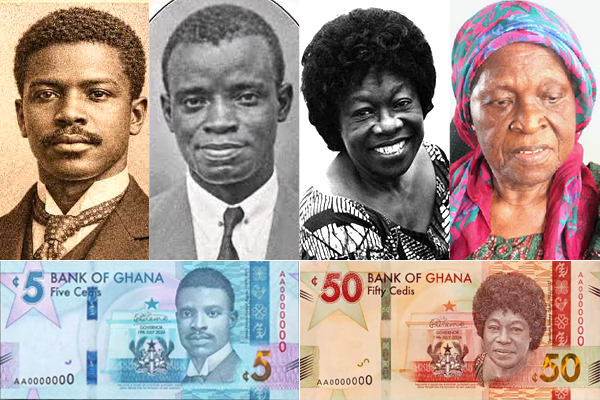
The Bank of Ghana (BoG) has been hit by another controversy over its newly unveiled Heritage Series banknotes, following allegations that the portrait featured on the redesigned GH¢5 note is that of George Ekem Ferguson, a 19th-century Gold Coast surveyor and colonial administrator, rather than the celebrated Ghanaian educationist, Dr James Emman Kwegyir Aggrey, whom the currency is intended to honour.
The latest allegation comes barely a day after the central bank issued what critics consider an unconvincing explanation of the controversy surrounding the portrait of Theodosia Salome Okoh, designer of Ghana’s national flag, on the new GH¢50 banknote.
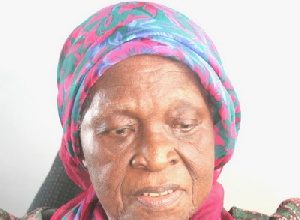
The Bank admitted that artistic alterations made to Mrs Okoh’s portrait, including the removal of her familiar head-tie and its replacement with a different hairstyle, had resulted in the image bearing a striking resemblance to that of her younger sister, Dr Letitia Eva Takyibea Obeng, who died in 2023.
However, the central bank maintained that the portrait was developed from several photographs of Mrs Okoh and not from a photograph of Dr Obeng, as alleged by members of the family.
The explanation has left unanswered questions about whether the Bank consulted relatives, historians and other individuals familiar with the personalities being honoured before approving the final designs.
Now, with fresh allegations emerging about the identity of the personality depicted on the GH¢5 note, the Bank faces a further task regarding the historical research, authentication procedures, and quality-control mechanisms employed in producing the Heritage Series.
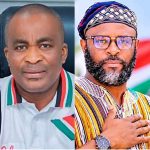
The latest controversy was sparked by the Ghanaian twin photographers popularly known as Twinsdntbeg, who have served as personal photographers to former Vice President Dr Mahamudu Bawumia and former Second Lady Samira Bawumia.
In a post on X on Friday, November 13, 2026, the photographers alleged that the portrait on the redesigned GH¢5 banknote was not that of Dr Kwegyir Aggrey but rather George Ekem Ferguson, a prominent figure in the colonial administration of the Gold Coast.
The twins accused the governing National Democratic Congress (NDC) administration of incompetence and suggested that the alleged error could result in financial losses to the state.
“This government is just wholly incompetent. All they know is to cause financial loss to the state,” they wrote, describing the alleged mistake as another national embarrassment for the government.
“Another day, another national disgrace by the NDC government. They can’t even get the simple task of designing new currency notes right,” the photographers stated.
Dr Kwegyir Aggrey, who lived from 1875 to 1927, was a distinguished Ghanaian educationist, intellectual and Pan-Africanist whose contributions to education helped shape the development of modern Ghana.
He is particularly remembered for his association with the establishment of Achimota School and his advocacy of educational advancement and opportunities for Africans.
George Ekem Ferguson, who lived from 1864 to 1897, was a prominent Gold Coast surveyor, cartographer and colonial administrator whose work contributed to the mapping and administration of territories in present-day Ghana.
Although both figures played significant roles in the country’s history, their achievements were in different fields, making the alleged confusion between their portraits a matter that requires careful historical verification.
The fresh allegation comes as the Bank of Ghana struggles to contain the controversy surrounding the image of Mrs Theodosia Okoh on the redesigned GH¢50 banknote.
The controversy erupted shortly after President John Dramani Mahama unveiled the upgraded Heritage Series at the Bank Square in Accra on Thursday, November 12, 2026.
The apparent discrepancy was brought to public attention by internationally acclaimed Ghanaian-born educator and business consultant, Professor Eddie Obeng, who identified the portrait on the GH¢50 note as that of his mother, Dr Letitia Obeng, rather than his aunt, Mrs Theodosia Okoh.
In a LinkedIn post, Professor Obeng expressed a mixture of amusement, disbelief and surprise over the discovery.
“I have a wry smile on my face that won’t go away, and occasionally I shake my head or giggle,” he wrote.
He explained that he had initially been delighted to learn that his aunt, who designed Ghana’s national flag, had been honoured on one of the newly unveiled banknotes.
“So, I heard this morning that my aunt had been honoured in a new series of issued banknotes in Ghana – she’s famous there for designing the country’s flag after independence from Britain. I was very proud and began composing a message to my cousin…”
However, his excitement quickly turned into astonishment when he examined the image.
“Imagine my surprise when I took a look and realized that they have used a picture of my mother instead – she’s famous for being the country’s first lady PhD.”
Professor Obeng concluded his post with the remark: “You can’t make it up.”
His disclosure triggered questions about how a portrait intended to honour one distinguished Ghanaian woman could bear such a close resemblance to her equally accomplished sister.
In an attempt to address the controversy, the Bank issued a statement on Friday, November 13, 2026, denying that it had mistakenly used Dr Letitia Obeng’s photograph.
The statement, issued by the Bank’s Communications Department without a name or signature, explained that the portrait had been developed from multiple photographs of Mrs Okoh and subsequently modified to meet the technical and security requirements of banknote production.
“The Bank confirms that the portrait was developed from different photographs of Mrs Okoh, and not from a photograph of her sister, Dr Letitia Obeng,” the statement said.
The central bank explained that the photographs were used to create an engraved artistic representation suitable for printing on currency.
“During this process, certain adjustments, including the replacement of Mrs Okoh’s familiar head-tie with a hairstyle common during that period, were made to meet the technical and security requirements of currency production,” it stated.
Significantly, the Bank acknowledged that the modifications had contributed to the resemblance between the two sisters.
“These adaptations, unfortunately, contributed to the perceived differences in her appearance, and to the image bearing a close likeness to Dr Obeng,” the statement admitted.
The admission confirmed that the portrait on the banknote was not a direct reproduction of a single historical photograph of Mrs Okoh, but an artistic representation created from multiple images and further altered.
However, the statement did not identify the original photographs used, explain who authorized the modifications or disclose whether independent historical experts had authenticated the final image. Neither did it establish whether the family had been consulted before the final portrait was approved for printing.
These omissions have become central to the questions surrounding the Bank’s handling of the controversy.
Although the Bank of Ghana acknowledged engaging Mrs Okoh’s family, after the unveiling, it provided no details of the discussions or the stage at which the engagement took place.
“The Bank appreciates the family’s constructive engagement and the public’s interest in preserving Ghana’s national heritage,” the statement said.
The reference to the family’s involvement has raised further questions about whether relatives were consulted before the portrait was approved or only after Professor Obeng publicly challenged its authenticity.
There have also been claims that members of the family lodged a complaint with the central bank regarding the portrait, although the details have not been independently confirmed.
The controversy has consequently shifted beyond the resemblance between the two sisters to broader concerns about the procedures used to authenticate the portraits of personalities selected for national recognition.
Critics are questioning why the Bank did not disclose whether it sought the views of surviving relatives, historians, archivists, and other individuals who could confirm the identities of the personalities being honoured.
The Bank’s explanation that artistic modifications were necessary for technical and security reasons has also left unanswered whether such alterations should have been permitted to change recognisable facial features without further verification.
The issue is particularly sensitive because Mrs Okoh and Dr Obeng were both accomplished Ghanaian women whose contributions deserve recognition in their own right.
Mrs Okoh, who died in 2015, designed Ghana’s national flag, featuring the red, gold and green horizontal stripes with the iconic black star, ahead of independence in 1957.
Her younger sister, Dr Obeng, distinguished herself as a pioneering zoologist and environmental scientist and is widely recognised as the first Ghanaian woman to obtain a doctorate.
Both women attended Achimota School and subsequently made significant contributions to Ghana’s development.
The controversy has also attracted political criticism, with Minority Leader Alexander Afenyo-Markin taking issue with the central bank and the government over the apparent confusion surrounding the GH¢50 portrait.
Mr Afenyo-Markin accused the authorities of failing to undertake adequate verification before unveiling the redesigned currency.
He raised the matter during his criticism of the 2027 Budget Statement presented to Parliament on Thursday, November 12, by Finance Minister Dr Cassiel Ato Forson.
The Minority Leader’s criticism added a political dimension to the controversy, which has already raised questions about the Bank’s internal approval procedures and the costs of producing the new currency.
The fresh allegations concerning the GH¢5 note could further intensify scrutiny of the project if credible evidence emerges that another historical personality has been wrongly depicted.
The controversies have also raised questions about the financial implications of any decision to correct the portraits before the new banknotes enter circulation.
The Heritage Series involves the design, production and planned distribution of redesigned currency featuring distinguished Ghanaian personalities.
Should an independent examination establish that any of the portraits is inaccurate, the Bank could face pressure to revise the affected designs.
Such a decision could have financial and logistical consequences, particularly if substantial quantities of the banknotes have already been printed.
However, the Bank has not disclosed the production cost of the Heritage Series or indicated how much, if anything, would be required to correct an established error.
There is also no independently verified evidence that the alleged portrait discrepancies have caused financial losses to the state.
The financial implications would depend on whether the allegations are substantiated, the stage of production and the measures the Bank considers necessary.
The upgraded Heritage Series marked a significant departure from the longstanding practice of featuring the collective portraits of Ghana’s independence leaders, popularly known as the Big Six, on the country’s banknotes.
Under the new arrangement, individual portraits of distinguished national personalities are intended to celebrate their contributions to Ghana’s political, educational, scientific, cultural and economic development.
The redesigned banknotes are also intended to improve durability, enhance security features and strengthen public appreciation of Ghana’s national heritage. However, the controversy surrounding the GH¢50 portrait, together with the fresh allegation involving the GH¢5 note, threatens to overshadow the historical significance of the initiative.
In its November 13 statement, the Bank reaffirmed that the portrait on the GH¢50 banknote was intended to honour Mrs Okoh and her contribution to Ghana’s national identity.
“The Bank reaffirms that the portrait is intended to honour Mrs Theodosia Salome Okoh and her invaluable contribution to Ghana’s national identity,” the statement said.
It pledged to ensure that distinguished personalities featured on the country’s currency were represented with dignity and respect.
Nevertheless, the Bank did not announce any decision to revise the portrait or provide details of the historical verification undertaken before approving the final design.
Its clarification also did not address the separate allegation concerning the identity of the personality featured on the GH¢5 note.