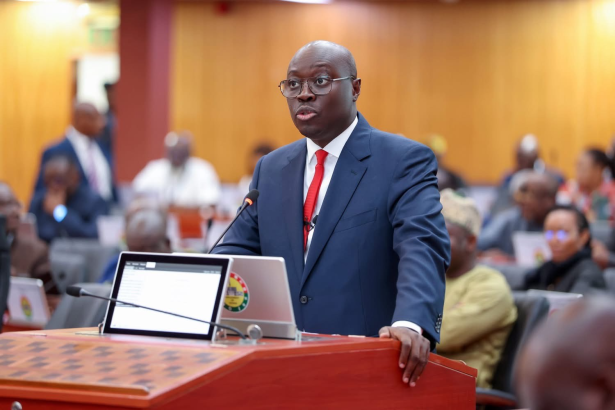
Finance Minister Dr Cassiel Ato Forson has ruled out additional borrowing to finance the government’s proposed New Economy Programme, saying the initiative will rely on domestic revenue and savings from fiscal consolidation.
He said the government intends to commit 1.5 per cent of Gross Domestic Product (GDP) annually to the programme between 2027 and 2030, with total funding projected to reach at least US$13 billion over the period.
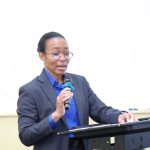
Dr Ato Forson made the disclosure during an engagement with students and members of the Kwame Nkrumah University of Science and Technology (KNUST) community.
He explained that 0.5 per cent of GDP would come from government revenue, while the remaining fiscal space would be created by reducing the primary surplus target from 1.5 per cent to 0.5 per cent of GDP.
The minister said the arrangement would enable the government to finance its economic transformation agenda without contracting new loans.
He also clarified that the Ghana Gold Board (GoldBod) does not generate revenue for the Ministry of Finance or the government, noting that state revenue is derived mainly from direct taxes, indirect taxes and non-tax revenue.
On public debt, Dr Ato Forson reaffirmed the government’s commitment to reducing the debt-to-GDP ratio to 45 per cent by 2028.
He said Ghana recorded a primary surplus of 2.5 per cent of GDP in 2025, while a surplus of 1.5 per cent was expected in 2026.
The two surpluses, he said, would contribute to a debt reduction equivalent to approximately four per cent of GDP.
From 2027, however, the government plans to slow the pace of debt reduction to 0.5 per cent of GDP annually to create additional fiscal room for investments under the New Economy Programme.
Dr Ato Forson maintained that the approach would allow the government to fund its proposed investments while keeping public debt on a declining trajectory.