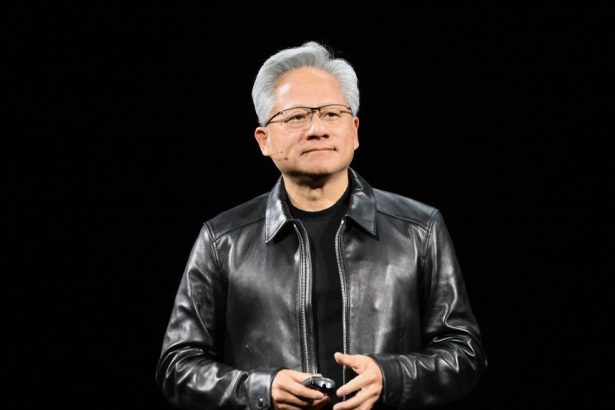
Nvidia’s board of directors has launched an independent investigation into allegations that Chief Executive Officer Jensen Huang was targeted in a Chinese intelligence operation aimed at obtaining sensitive information from the technology giant.
The investigation follows claims contained in a memo circulated among United States policymakers earlier this year, alleging that Alice Huang, a former executive of Singapore-based semiconductor company Megaspeed, had been recruited by China’s Ministry of State Security to spy on the Nvidia chief.
The allegations have also brought renewed attention to Jensen Huang’s personal relationship with Alice Huang, with the Nvidia CEO publicly acknowledging an affair with her in a message released by the company.
In the message, Mr Huang apologised to his wife, children, colleagues and other stakeholders, admitting that he had been unfaithful to his wife.
“I owe my family and all of you an apology. I was unfaithful to my wife. My actions hurt her and our children. There is no excuse for what I did. I am deeply sorry,” he wrote.

He also acknowledged that his conduct had fallen short of the responsibilities attached to his position, extending his apology to Nvidia employees, the board, business partners and shareholders.
Nvidia’s board said it had no reason to believe that national security interests or the company’s confidential information had been compromised.
It said Mr Huang supported the investigation and had committed to cooperating fully with the review, while reaffirming its confidence in him and his leadership team.
The probe will be conducted by independent directors with the assistance of external legal counsel.
The allegations emerge against the backdrop of growing technological competition between the United States and China, particularly in artificial intelligence and advanced semiconductor manufacturing.
Nvidia’s chips have become central to the global artificial intelligence industry, powering the development and deployment of advanced AI systems. The company’s strategic importance has also placed it at the centre of wider geopolitical and national security concerns surrounding access to advanced computing technology.
In an earlier response to reports about Mr Huang’s relationship with Alice Huang, Nvidia described their interactions as not unusual and maintained that classified information was not shared with customers.
The allegations also reflect broader concerns within the technology industry about corporate espionage and attempts to obtain sensitive information through personal and professional relationships.
Several companies involved in the artificial intelligence sector have warned employees to remain vigilant about possible intelligence-gathering approaches, including attempts involving romantic relationships.
The independent investigation is expected to examine the reported contacts and determine whether any confidential company information or national security interests were exposed.
Nvidia has not indicated when the review will be completed.