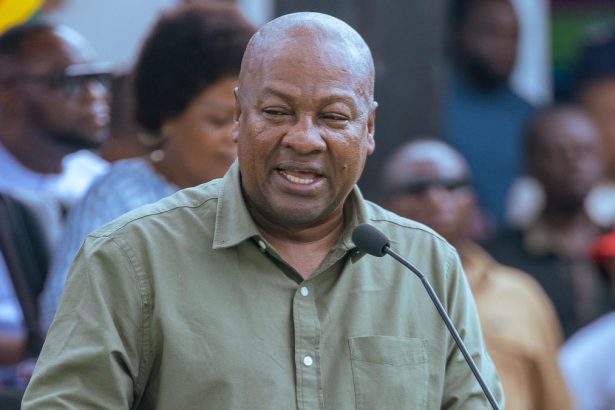
President John Dramani Mahama has commended the Ghana Gold Board (GoldBod) for helping generate US$10.8 billion in foreign exchange earnings from artisanal and small-scale mining (ASM) gold exports in 2025.
He said the figure represented a substantial increase from the US$4.66 billion recorded in 2024, highlighting the growing contribution of formalized small-scale gold exports to Ghana’s economy.
President Mahama made the remarks at the Mining in Motion Conference in Accra, where he praised GoldBod for its performance since commencing operations in April 2025.
“I’m happy to note that the GoldBod in 2025 alone, with the regulation of export of small-scale gold, brought into this country 10.8 billion dollars, which is an almost 100% increase over the 4.66 billion USD that came into the country in 2024,” he said.
The President also disclosed that gold exports from the artisanal and small-scale mining sector increased from 64 tonnes in 2024 to 104 tonnes in 2025.
More Read

The 2025 figure covered the period from April to December, following GoldBod’s establishment.
The increase in export volumes and foreign exchange earnings underscores the significance of small-scale mining to Ghana’s gold trade and the government’s efforts to strengthen regulation and channel more transactions through formal systems.
GoldBod was established under the Ghana Gold Board Act, 2025 (Act 1140), with a mandate to regulate and develop the country’s gold trading industry, formalize artisanal and small-scale gold transactions, and support foreign exchange generation.
The board occupies a central position in the government’s strategy to improve oversight of gold trading, strengthen accountability and maximize the economic benefits Ghana derives from its mineral resources.
President Mahama’s commendation comes amid broader efforts to reform the mining sector, improve the management of mineral resources, and increase the value the country retains from gold exports.
The figures cited by the President point to the growing contribution of regulated small-scale gold exports to Ghana’s foreign exchange earnings.
However, sustaining the gains will depend on effective oversight, the continued formalization of gold trading, stable export volumes, and efforts to curb illicit gold transactions.
The long-term success of the initiative will also depend on the extent to which increased export earnings translate into broader economic benefits for the country.