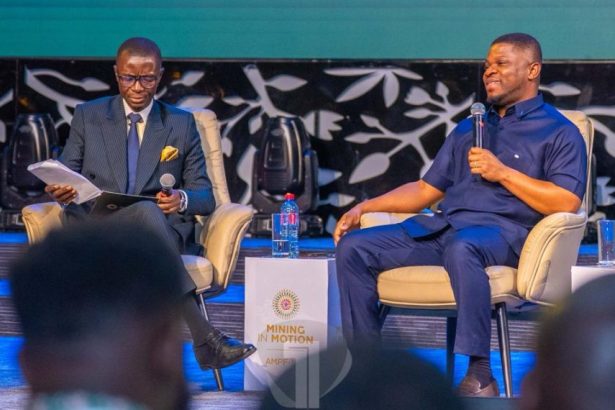
The Chief Executive Officer of the Ghana Gold Board (GoldBod), Sammy Gyamfi, says President John Dramani Mahama has directed the Board to remain committed to its gold trading model despite concerns raised by the International Monetary Fund (IMF) and other international institutions.
Mr Gyamfi said Ghana had followed policy prescriptions from international institutions for decades without achieving the results the country was now recording, arguing that the government must prioritise policies it considers to be in the national interest.
Speaking at the Mining in Motion Conference on Tuesday, October 20, he said the government remained confident in GoldBod’s approach and would not abandon it simply because its policies differed from the views of external institutions.
“People are entitled to their opinions, but President Mahama has told us to remain focused, because we’ve listened to the prescriptions of these institutions for decades, and we have not seen the kind of results we are seeing today,” he said.
His comments come amid concerns from the IMF over losses associated with GoldBod’s operations and the potential implications for the Bank of Ghana’s balance sheet.
More Read

Mr Gyamfi acknowledged that Ghana’s participation in an IMF programme gives the Fund a basis to comment on the country’s economic policies. However, he maintained that such engagement should not prevent the government from pursuing measures it believes will deliver better economic outcomes.
He said Ghana remained open to collaboration and the exchange of ideas with international institutions but would prioritise national interests where disagreements over economic policy arose.
“Where we have to collaborate, we’ll collaborate, where we have to share ideas, we’ll share ideas, but where opinions conflict, we will uphold what is in our national interest,” he added.
Mr Gyamfi also defended GoldBod’s financial performance, citing a surplus of more than GH¢5.4 billion recorded in 2025, including an operational surplus of GH¢900 million.
He argued that the Board’s performance should not be assessed solely on its financial position but also on its efforts to curb gold smuggling, increase official gold purchases from the artisanal and small-scale mining sector, and boost the country’s foreign exchange earnings.
According to him, Ghana’s gold trading policy is intended to ensure that a greater share of the country’s mineral wealth passes through official channels instead of being lost to smuggling and informal transactions.
He maintained that the government remained committed to the policy despite differing views over the financial implications of GoldBod’s operations.