The Director-General of the National Development Planning Commission (NDPC), Dr Audrey Smock Amoah, has called for a stronger reliance on evaluation evidence in Ghana’s national development planning, warning that generating data and producing reports must translate into concrete policy decisions and measurable improvements in people’s lives.
She said the effective use of evaluation findings was critical to closing implementation gaps, improving resource allocation and strengthening accountability in the delivery of national development policies and programmes.
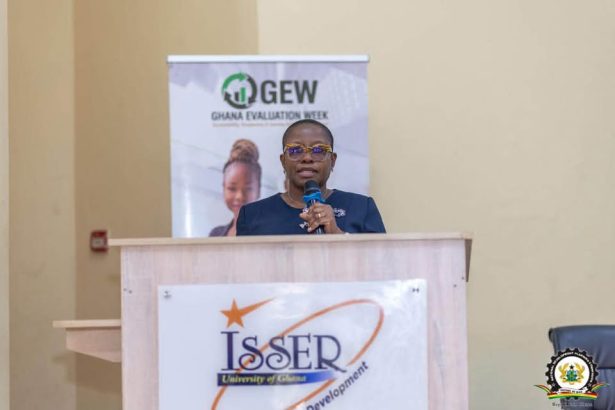
Dr Amoah made the call at the 2026 Ghana Evaluation Week (GEW) Conference at the University of Ghana, Legon, where government officials, development partners, researchers and evaluation practitioners gathered to examine ways of strengthening the link between evidence, policymaking and development outcomes.
The three-day conference, running from October 19 to 21 at the Institute of Statistical, Social and Economic Research (ISSER) Conference Room, is being held under the theme, “Strengthening Evidence Use for Inclusive Development: Bridging Policy, Practice and Innovation.”
Addressing participants, Dr Amoah stressed that evaluation should serve as a practical tool for decision-making rather than remain an administrative exercise centred on data collection and report writing.
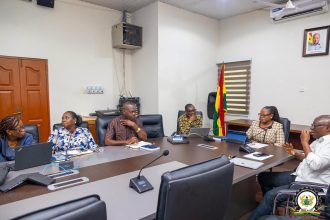
“Evaluation must help us identify what works, understand implementation gaps and determine what needs to change to deliver better outcomes for all,” she said.
She cited the evaluation of the 2022–2025 Medium-Term National Development Policy Framework as an example of how evidence could shape national priorities, explaining that its findings informed four strategic shifts under the 2026–2029 framework.
These include strengthening institutional and human capital, advancing regulatory and legal reforms, ensuring predictable financing for development interventions, and promoting data-driven coordination.
The shifts, she indicated, underscore the importance of using lessons from previous development cycles to refine policies, address weaknesses and improve implementation in subsequent planning periods.
NDPC strengthens evaluation efforts
Dr Amoah also highlighted efforts by the NDPC to strengthen the generation and use of evaluation evidence across key public programmes and systems.
She disclosed that mirror reports had been completed on the Livelihood Empowerment Against Poverty (LEAP) programme, the National Health Insurance Scheme (NHIS), the Free Senior High School programme and the Ghana Integrated Financial Management Information System (GIFMIS).
The reports were developed with support from the German development agency GIZ through its Participation, Accountability and Integrity for a Resilient Democracy (PAIReD) programme.
The initiatives form part of broader efforts to assess development interventions, identify areas requiring improvement and provide decision-makers with evidence to guide policy adjustments.
Dr Amoah, however, emphasised that the value of such work would ultimately depend on whether the findings informed decisions and resulted in meaningful changes in implementation.
She called for sustained collaboration among development partners, academia, civil society organisations, government institutions and evaluation practitioners to ensure that evidence generated through research and assessments was translated into action.
“Let us sustain the collaboration and move beyond generating evidence to using it; beyond documenting progress to addressing implementation gaps; and beyond making commitments to achieving measurable improvements in the lives of our people,” she urged.
GMEF highlights capacity-building needs
Meanwhile, the President/Coordinator of the Ghana Monitoring and Evaluation Forum (GMEF), Ms Dede Bedu-Addo, underscored the need to strengthen the organisation’s capacity to sustain its activities and determine its own priorities.
She also highlighted interest from individuals outside Ghana, describing it as an opportunity to expand the forum’s reach and deepen collaboration within the monitoring and evaluation community.
The conference provides a platform for stakeholders to exchange knowledge, share experiences and explore innovative approaches to making evaluation findings more influential in public policy and development practice.
As Ghana continues to implement its national development priorities, the emphasis on evidence-informed planning is expected to remain central to efforts to improve programme delivery, ensure responsible use of public resources and achieve inclusive development.
The conference ends on October 21.