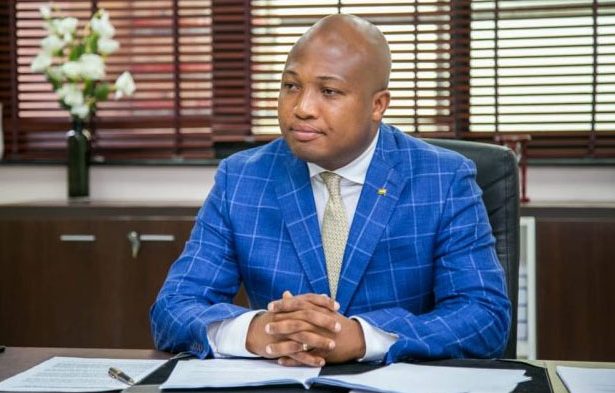
Ghana has opposed calls to abolish the International Criminal Court (ICC), with Foreign Affairs Minister Samuel Okudzeto Ablakwa arguing that the court should instead be strengthened to hold perpetrators of crimes against humanity accountable.
Ablakwa made the position known at a United Nations General Assembly high-level meeting in New York on Monday, September 28, to mark the 25th anniversary of the Durban Declaration and Programme of Action. The UN confirms that the meeting was held on September 28 to commemorate the 2001 declaration, which addresses racism, racial discrimination, xenophobia and related intolerance.
“The ICC needs our protection, not our condemnation,” Ablakwa said, calling for consequences for those responsible for crimes against humanity and violations of the principles contained in the Durban Declaration.
He said the 25th anniversary should go beyond commemoration and lead to renewed action against racism, racial discrimination and historical injustice.
According to the minister, the world continues to face anti-Black racism, xenophobia and conflicts that have caused widespread suffering, including in Palestine and Sudan.
More Read

He also questioned Africa’s continued lack of a permanent seat on the UN Security Council despite the continent’s population of about 1.4 billion.
Turning to reparatory justice, Ablakwa said the effects of slavery and the transatlantic trafficking of enslaved Africans continue to influence inequalities.
He said Ghana was seeking a sincere apology, the return of looted assets and cultural property, reparations for continuing harm and a commitment to prevent similar atrocities from occurring again.
“The Durban Commitments must become reality, not a mere slogan,” he told the General Assembly.
The minister’s remarks formed part of Ghana’s participation in the UN meeting marking 25 years since the adoption of the Durban Declaration and Programme of Action. The United Nations describes the declaration as a global framework for combating racism, racial discrimination, xenophobia and related intolerance.
Ghana has also been pursuing a reparatory justice agenda at the United Nations, including its role in a resolution concerning the transatlantic slave trade and its historical consequences.