By Patrick Biddah
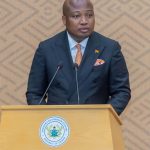
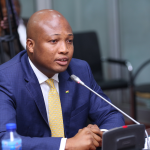
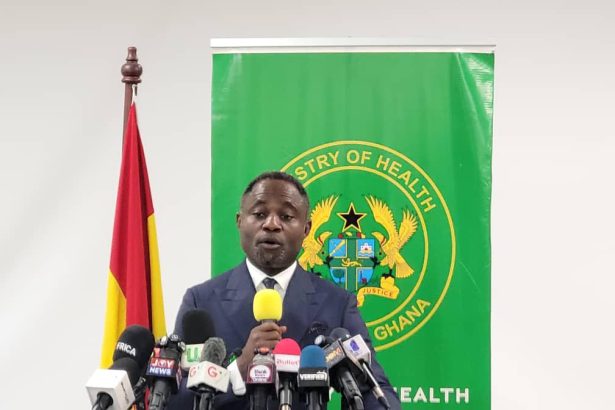
Ghana’s Free Primary Healthcare Programme represents a major shift in the country’s healthcare delivery system, with a new focus on preventing diseases and illnesses rather than waiting to treat them after they occur, the Minister of Health, Kwabena Mintah Akandoh, has said.
According to Mr. Akandoh, the programme is designed to move healthcare delivery from hospitals into communities and bring quality primary healthcare directly to the doorsteps of ordinary Ghanaians.
The programme has already commenced in 135 districts across all 16 regions, with government targeting coverage of 150 districts by the end of the year.
The first phase places particular emphasis on deprived communities, with plans to extend free primary healthcare nationwide by the end of 2027.
Mr. Akandoh made the disclosure during a media engagement on the implementation of the programme, saying 4,574 health facilities across the country are currently providing services under the initiative. These include Community-based Health Planning and Services (CHPS) compounds, health centres and polyclinics.
“We are taking quality healthcare to the doorstep of the ordinary Ghanaian,” the Minister said, stressing that the programme seeks to detect and address health problems early before they develop into serious illnesses or result in death.
The Free Primary Healthcare package combines curative, preventive and health-promotion services. It covers the treatment of common conditions such as malaria, respiratory diseases and diarrhoea, alongside screening for hypertension, diabetes, selected cancers and mental health conditions.
The programme also provides maternal and child health services, nutrition support, physical activity guidance, hygiene and sanitation education, as well as counselling on healthy lifestyles.
The emphasis, however, is on prevention and early detection as a means of improving the health and productivity of the population.
To support implementation, health workers and support staff have been trained, while primary healthcare facilities have undergone retooling. More than 24,500 pieces of personal protective equipment have also been distributed to health facilities and communities, with additional basic equipment and logistics being procured to support house-to-house healthcare delivery.
The government is also expected to distribute thousands of motorbikes and tricycles to enable health professionals to reach more people in their communities.
About 30 computerised health posts have meanwhile been established at strategic locations, including lorry stations and market areas, with plans to establish more across the regions and districts.
Citing an example from Atebubu-Amantin, Mr. Akandoh said health workers were collaborating with transport operators to screen drivers for health conditions.
Drivers found with dangerously high blood pressure are prevented from driving until they receive appropriate medical attention, demonstrating how early detection can prevent potentially fatal consequences.
The Minister clarified that Free Primary Healthcare is limited to primary-level services delivered at CHPS compounds, health centres and polyclinics and does not mean free treatment at major hospitals. The National Health Insurance Scheme (NHIS) will continue to play an important.