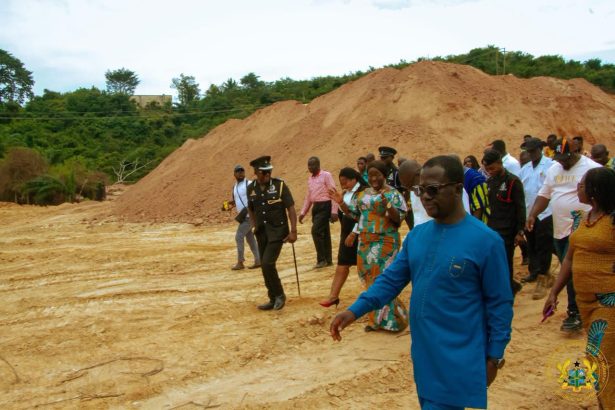
The government has begun groundwork towards the establishment of a garment factory in Cape Coast, a move expected to create jobs and expand textile manufacturing in the Central Region.
Minister for Trade, Agribusiness and Industry, Elizabeth Ofosu-Adjare, inspected the proposed site on Monday, August 31, 2026, as government advances plans to establish garment factories in the Central, Eastern and Bono Regions.
The project forms part of the government’s broader industrialisation agenda, with the garment and textile sector being positioned as a key area for expanding domestic production, creating employment and supporting Ghana’s export ambitions.
During the inspection, the Minister said the proposed Cape Coast site was suitable for the project, citing its accessibility and proximity to major road networks as an advantage for workers who would commute to the facility.
She said the chiefs and people of the area had made land available for the project and had already begun preparatory work, including excavation.
More Read
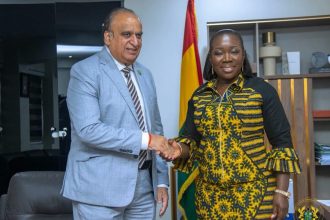
According to Ms Ofosu-Adjare, the site could be ready within one to two months, subject to the completion of the ongoing preparatory works.
She said the enthusiasm shown by the local community towards the project was encouraging, particularly because of the employment opportunities the factory could create for residents.
“Garment factories create jobs,” she said, pointing to the recently commissioned Northshore Apparel Hub in Savelugu as an example of the potential of the sector.
The Savelugu facility, commissioned on August 28, 2026, is expected to create about 3,000 jobs in its first phase, with employment projected to reach 10,000 when fully operational.
The facility is also expected to contribute to Ghana’s export drive, with management preparing to commence international shipments.
The Savelugu factory is being presented as an example of how the government’s 24-Hour Economy initiative can increase production and employment through multiple-shift operations.
Ms Ofosu-Adjare said government intends to replicate such opportunities in other parts of the country, including Cape Coast.
She cautioned, however, that the establishment of a government-supported industrial project involves a number of technical and administrative processes, including feasibility studies, procurement and other assessments.
“Anytime you are doing a government project, you go through a process,” she said.
The Minister said transaction advisors were working on the proposed garment projects and that construction could begin once the necessary processes had been completed.
She assured the chiefs and people of Cape Coast that government would communicate a definitive construction timeline after the requisite processes had been concluded.
The Cape Coast project is expected to add to government’s efforts to decentralise industrial development while using the garment and textile industry to create employment, boost local production and strengthen Ghana’s position in export markets.