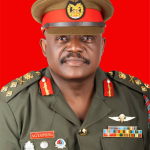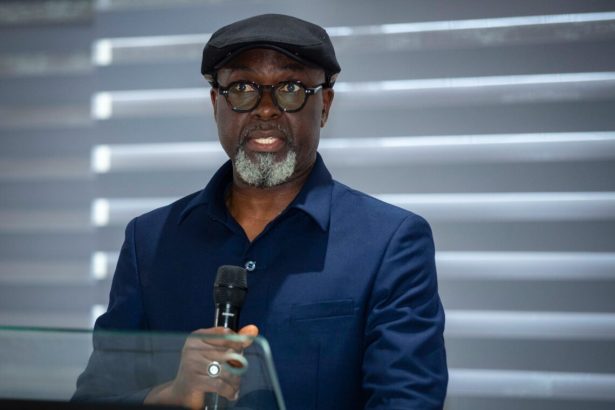
National Security Coordinator has urged Ghanaian journalists to take an objective stand on issues affecting the country’s security, rather than remaining neutral when the facts clearly establish what is right or wrong.
Osman Abdul-Razak, a Commissioner of Police (COP), said journalists had a responsibility to conduct thorough research, establish the facts, and have the courage to report accordingly in the national interest.
Using a driving analogy from his law interview, COP Abdul-Razak said journalists should not remain “in the middle” when they have sufficient information to determine the truth.
“How do we drive in Ghana? Do we drive in the middle? You don’t drive in the middle. For you to be able to choose a position, it means you have done your research very well, and you know what is right, and you have the courage to do it. If it’s wrong, you say it. If it’s right, you say it. You don’t stay in the middle,” he said.
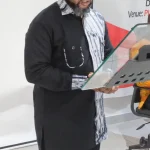
COP Abdul-Razak made the remarks when he delivered the keynote address at the PRINPAG Capacity-Building Workshop on Responsive National Security Reporting in Accra.
More Read
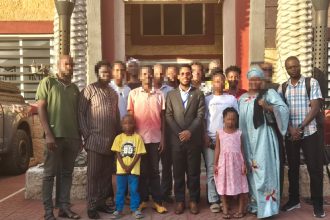
The workshop, held at the Platinum Bay Hotel in Abokobi in the Ga East District of the Greater Accra Region, on Saturday, August 29, 2026, brought together print and online journalists for training on Ghana’s national security architecture, its legal framework, ethical considerations, cybersecurity and the threats irresponsible journalism could pose to the peace and tranquility of the country.
The National Security Coordinator announced support for periodic training programmes for journalists and editors in disciplines that could improve national outcomes promising to facilitate access to key personalities and field trips for participants, including lectures on terrorism involving soldiers and police officers.
COP Abdul-Razak further said his office was ready to establish a standard channel of dialogue between the security services and newsrooms to ensure that clarity replaced speculation during periods of national anxiety.
“My office is ready to establish a standard channel of dialogue between the security services and your newsrooms so that clarity replaces speculation in moments of national anxiety, and to work with you on guidelines of security reporting drawn up with you and not for you,” he said.
He stressed that National Security did not intend to impose reporting guidelines on journalists, insisting that the Private Newspapers and Online News Publishers Association of Ghana (PRINPAG) should instead propose practical ways of strengthening cooperation between the media and security institutions.
COP Abdul-Razak described Ghana’s information space as an important part of the country’s national security perimeter, alongside its borders, territorial waters and physical security installations.
According to him, responsible journalism plays a critical role in protecting Ghana’s democracy and strengthening national security; therefore, the media must be recognized as an important partner in preventive security.
He said a free and responsible press could serve as an instrument of security by exposing corruption, holding public officials accountable, and providing citizens with lawful avenues to express their frustrations.
“When the press exposes corruption, it protects the public purse more than any prosecution. When it holds power accountable, it gives a lawful outlet to frustration that would otherwise reduce to violence and reduce recruitment and propaganda of extremists,” he said.
He added that truthful and responsible reporting during periods of tension could help calm the nation and prevent misinformation from escalating into conflict.
“When the press reports truthfully in moments of tension, it becomes the nation’s steady hand,” he said.
COP Abdul-Razak also attributed part of Ghana’s democratic stability, particularly in a region that has experienced several military takeovers, to the media’s responsible role at critical moments.
“If Ghana’s democracy remains outstanding in a region of coups, it is in no small measure because at decisive moments the press has chosen responsibility,” he stated.
He stressed that the workshop was not intended to provide a one-way lecture from National Security to journalists, but rather to create an opportunity for the two institutions to learn from each other.
“We have not come to teach. We have come to learn from each other,” he told members of PRINPAG.
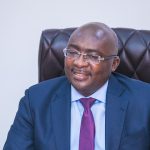
The Minister for Government Communications, Felix Kwakye Ofosu, called for a stronger partnership among Government Communications, PRINPAG and national security institutions to enhance preventive security and early-warning systems in Ghana.
In a speech read on his behalf by the Deputy Presidential Spokesperson, Shamima Muslim, Kwakye Ofosu said that effective communication between the government and the media was critical to preventing misinformation, reducing tensions, and protecting national peace.
The workshop was held under the theme: “Media as a Strategic Partner in Preventive Security and Early Warning in Ghana.”
Mr Kwakye Ofosu said responsible security reporting could not be the responsibility of journalists alone, stressing that government and security institutions also had a duty to communicate with the public and the media in a timely, accurate and consistent manner.
He warned that when accurate official information was unnecessarily delayed, speculation and misinformation could quickly fill the resulting information vacuum.
“Responsible security reporting is not the media’s burden alone. Government and the security institutions must communicate in a timely, credible, and coordinated manner,” he said.
The Minister proposed establishing a secure verification channel involving PRINPAG leadership, the National Security apparatus, and the Government Communications Office to facilitate rapid verification of information during security incidents.
He clarified that such a mechanism should not amount to censorship but should provide journalists with a reliable avenue for verifying sensitive information before publication.
Mr Kwakye Ofosu also proposed quarterly security briefings for editors, including off-the-record engagements to provide journalists with a better understanding of emerging security threats and the context surrounding sensitive developments.
Other proposals included support for journalists’ safety and Right to Information training, as well as the development of a PRINPAG Code for Responsible Security Reporting.
The Minister rejected the perception that a free press was necessarily a threat to national security, arguing instead that media freedom could contribute significantly to national stability.
“Media freedom is a security strategy, not a security threat,” he said.
He urged government and security agencies not to regard critical journalism as an obstacle, stressing that scrutiny and accountability remained essential components of a healthy democracy.
Mr Kwakye Ofosu, however, cautioned journalists against sacrificing accuracy for speed, particularly in reporting sensitive security developments.
He urged media practitioners to verify information before publication and consider whether their reports could expose security personnel, endanger victims, reveal operational details, or inflame ethnic and religious tensions.
He said professional journalism had become increasingly important in an era of artificial intelligence, deepfakes, and coordinated disinformation.
The Minister also expressed concern about the declining fortunes of the print media, describing newspapers as important repositories of Ghana’s national memory.
He said that although social media was often faster in breaking information, professional newspapers and credible online platforms provided verification, context, and a permanent record of national events.
PRINPAG President David Tamakloe, in his welcome address, warned against attempts to dismiss traditional journalism as outdated, insisting that professional media remained indispensable to Ghana’s democracy, national security and public accountability.
He said the responsibilities of professional journalists had become even more critical in an environment where misinformation and unverified information could spread rapidly and influence public perceptions of security incidents.
Mr Tamakloe rejected what he described as the growing misconception that the rise of social media meant professional journalism was becoming irrelevant.
“We are being fed a dangerous lie that this chaotic digital space will take over, that the traditional press is a dying relic. Let us not be deluded! There is no alternative to the traditional media,” he declared.
He drew a distinction between professional journalism and unregulated social media content, insisting that the standards, ethics and responsibilities associated with journalism could not simply be discarded in the digital age.
“Let me be unequivocal: the madness we witness on social media is NOT journalism,” he said.
Mr Tamakloe said journalism had historically played a critical role in exposing wrongdoing, defending vulnerable groups and documenting events that shape society.
“If we abandon journalism, we abandon memory itself,” he said, urging stakeholders to protect and strengthen the profession rather than allow financial and institutional pressures to undermine it.
He also called for stronger support for private media organizations, arguing that responsible journalism required adequate resources, effective regulation and meaningful partnerships with institutions responsible for national security.
“The pen is mightier than the sword. But a pen without ink is useless,” he said, using the analogy to call for greater investment in the media sector.
PRINPAG Executive Secretary Jeorge Wilson Kingson said the workshop had become necessary because of Ghana’s changing security environment and the increasing complexity of contemporary threats facing the country.
He said the media remained a major source of information and public education during security incidents, making the quality, accuracy, and context of reports particularly important to national stability.
Mr Kingson said the training brought together 45 editors, senior reporters, news publishers and media owners from private newspapers and online media platforms belonging to PRINPAG.
The programme covers Ghana’s national security architecture, communal conflicts and conflict-sensitive journalism, as well as strategic communication and information management during security incidents.
Participants are also expected to examine the Security and Intelligence Agencies Act, 2026 (Act 1168), cybercrime, digital threats and information warfare, alongside the relationship between national interest, ethics and constitutional press freedom.
Mr Kingson said the organisers had deliberately designed the workshop to move beyond conventional lectures, with participants expected to participate in interactive discussions, case studies, group exercises and scenario-based newsroom simulations.
He said the ultimate objective was to equip journalists with the knowledge and professional judgment required to produce security reports with greater accuracy, balance, depth and context while reducing sensational reporting that could escalate tensions or undermine legitimate security operations.