By Abigail Teye
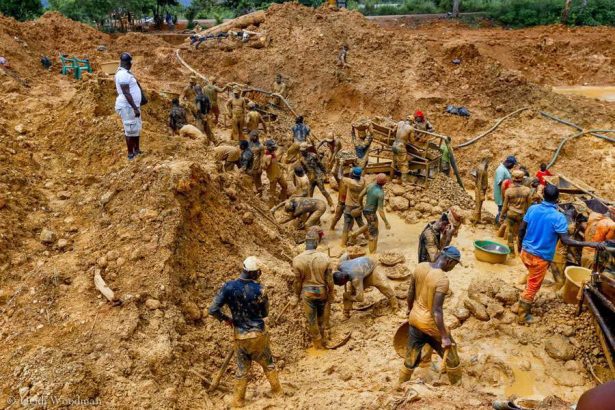
The Ghana Association of Radiologists has raised alarm over what it describes as a growing link between illegal mining (galamsey) and rising cases of kidney disease in Ghana, warning that the crisis is no longer just environmental but increasingly medical.
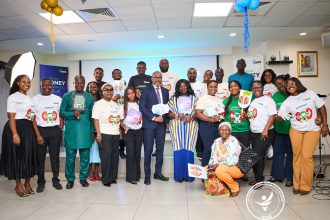
At its 14th Annual General and Scientific Meeting in Accra, the Association’s President, Dr Francis Ofei, said the indiscriminate use of mercury and cyanide in illegal mining is contaminating water bodies and exposing millions of people to long-term organ damage.
“The indiscriminate use of mercury and cyanide in artisanal gold mining operations has resulted in catastrophic contamination of our water bodies,” Dr Ofei said. “This situation is not merely an environmental issue. It is a public health catastrophe.”
He explained that chemicals used in galamsey operations enter rivers such as the Pra, Birim, Ankobra and Offin, which many communities depend on for drinking and domestic use.
According to him, repeated exposure to these heavy metals places a direct burden on the kidneys, which filter toxins from the human body. “With repeated exposure, the kidneys give up eventually,” he warned.
A report cited by the Association, attributed to Dr Mensah Amoah, a Physician Specialist and Nephrology Fellow, estimates that about 13 per cent of Ghana’s adult population — roughly four million people — may be living with chronic kidney disease, with many cases found among people aged 20 to 50.
Speaking in a separate engagement on kidney health in Ghana, Dr Josephine Osafo, a Nephrologist and President of the Ghana Kidney Association, has also warned that kidney disease is rising silently, with many patients reporting late.
She explained that in many cases, patients only seek medical attention when the disease has already reached an advanced stage, making treatment difficult and expensive.
According to her, while hypertension and diabetes remain major causes of kidney failure, environmental pollution — including exposure to chemicals linked to illegal mining — is increasingly becoming a contributing factor in affected communities.
Environmental advocate Daryl Bosu, Deputy Director of A Rocha Ghana, has also consistently warned that galamsey is destroying Ghana’s water systems at an alarming rate.
He has described the situation in mining-affected areas as “worrying and unsustainable,” stressing that communities continue to live with polluted rivers despite government interventions.
“Communities are still living with polluted rivers and degraded lands,” Bosu has said in previous engagements. “Until enforcement becomes consistent and strong, the problem will persist.”
He has repeatedly pointed to rivers such as the Pra, Birim and Ankobra as heavily impacted water bodies, warning that contamination is affecting both drinking water and agricultural livelihoods.
Medical professionals explain that the concern goes beyond visible pollution.
The Ghana Association of Radiologists is now calling for stronger national action, arguing that the issue must be treated as both an environmental and health emergency.
Dr Ofei has also urged investment in diagnostic equipment such as ultrasound, CT scans and MRI machines to improve early detection of kidney-related conditions.
He further stressed the need for collaboration between radiologists, nephrologists and other specialists to improve patient outcomes.
The warnings from both radiologists and environmental experts point to a growing consensus: galamsey is no longer only a land and water issue.
It is increasingly being linked to long-term health risks, including chronic kidney disease, particularly in communities directly exposed to mining pollution.
As illegal mining continues in parts of the country, health professionals say Ghana may be facing a slow-moving public health crisis that will take years to fully understand — and even longer to reverse.
For now, Dr Ofei’s warning remains stark: “This is not merely an environmental issue. It is a public health catastrophe.”