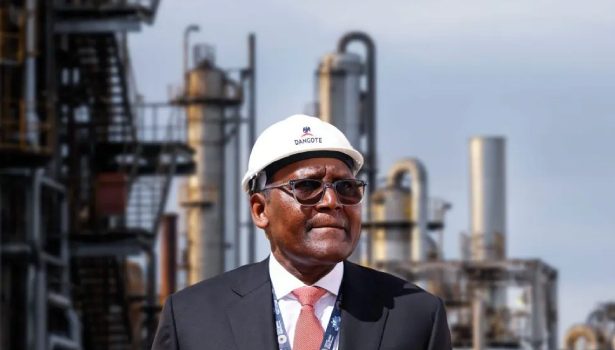
Nigerian business magnate Aliko Dangote has urged Ghana to expand its economic ambitions beyond its domestic market and tap into the commercial opportunities across West Africa, citing access to a regional market of about 450 million people.
He said Ghana could strengthen its economic position by attracting investment into productive industries, expanding local manufacturing and using regional trade agreements to reach consumers in neighbouring countries.
Speaking at the maiden Invest in Ghana Summit on Monday, November 16, Mr Dangote urged Ghanaian entrepreneurs and investors to consider the entire West African subregion as a potential market for their businesses.
He said Ghana’s market should not be measured solely by its population, given the opportunities available through the Economic Community of West African States (ECOWAS).
“When you are talking about Ghana’s market, it’s not only the population of Ghana. Ghana’s market, I was telling you, is 450 million people’s market,” he said.

Mr Dangote said regional integration could enable businesses operating in Ghana to increase production and distribute their goods across neighbouring countries through trade arrangements among ECOWAS members.
He called for deliberate efforts to position Ghana as a regional manufacturing and distribution hub.
He also identified inadequate transport infrastructure as a major constraint to cross-border trade and proposed the construction of a 1,000-kilometre road linking Nigeria, Ghana and Côte d’Ivoire.
He said the project could improve the movement of goods and strengthen trade among the three countries.
Mr Dangote added that he intended to engage the Ghanaian President and other regional leaders to secure priority attention for the proposed road.
“I think we are really going to engage with the President and the other Presidents to make sure that this road is given a priority,” he said.
Beyond regional trade, Mr Dangote urged African countries to reduce their dependence on imported goods, arguing that sustainable economic growth required stronger domestic production.
He said countries that relied heavily on imported finished products without developing local industries risked losing employment and investment opportunities to manufacturing economies.
“If you are a consumer, you are not a producer; you will never, ever create jobs. You will never, ever create prosperity,” he said.
Using Ghana’s rice industry as an example, he urged consumers and policymakers to support locally produced rice, even when imported alternatives were cheaper.
“Even if today in Ghana you are producing rice at a little bit more expensive than the imported one, it’s okay,” he said.
Mr Dangote said buying locally produced goods would support farmers, processors and other businesses along the domestic supply chain.
He also disclosed plans by the Dangote Group to explore investments in Ghana’s agriculture sector, particularly sugar production, cocoa processing and rice milling.
He said discussions were ongoing with the government over a proposed sugar investment that could create nearly 50,000 jobs.
The group was also prepared to consider establishing an additional 500,000 metric tonnes of rice-processing capacity in Ghana, subject to an agreement with the government.
Mr Dangote said such investments would help link local agricultural production to industrial processing and reduce the country’s reliance on imported commodities.
He maintained that African countries must first build the capacity to meet more of their domestic consumption needs through local production before placing greater emphasis on expanding exports.