The Media Foundation for West Africa (MFWA) has urged media owners, managers and editors to take greater responsibility for journalists’ safety and welfare, insisting that protecting reporters should be an institutional obligation, not an individual one.
The Foundation said journalists continued to face increasing threats, including physical attacks, online harassment, intimidation, legal pressure and psychological distress, making it imperative for media organisations to establish effective safety mechanisms to protect their staff.
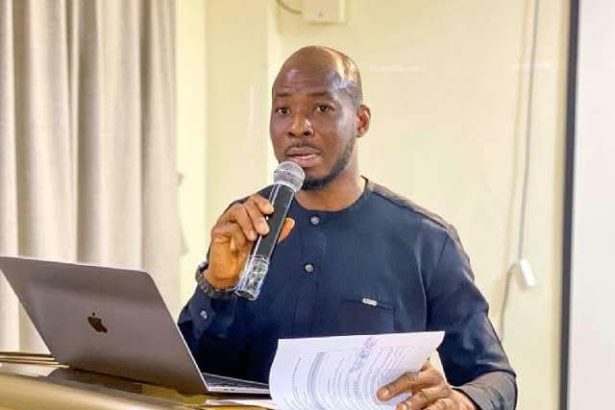
The MFWA organised the one-day workshop on Thursday, November 12, 2026, in Accra to promote the adoption of its newly developed Model Safety of Journalists’ Policy by newsrooms in Ghana.
The workshop forms part of broader efforts by the MFWA to encourage media organisations across Ghana to institutionalize journalists’ safety policies and create working environments where reporters can carry out their professional responsibilities without undue fear, intimidation or threats to their lives.
The Model Safety of Journalists’ Policy is designed to provide media organisations with an adaptable framework for strengthening the safety and well-being of their journalists through preventive, protective and responsive institutional measures.
More Read

The policy was developed as part of the MFWA’s project titled “Countering Corruption through Accountability Journalism and Improved Freedom of Expression Environment in Ghana.”
The project seeks to promote accountable governance while strengthening the environment for press freedom and freedom of expression in the country.
Speaking at the event, the Programme Director of the MFWA, Dr. Kojo Impraim, said media houses must ensure that journalists are adequately prepared, equipped and protected while undertaking their professional assignments.
“While journalists must take precautions to protect themselves, their safety cannot be treated as a responsibility for themselves alone,” he stated.
Dr. Impraim disclosed that West Africa recorded 32 cases of attacks on journalists in the first quarter of 2026, with the figure rising to 42 by the end of the second quarter.
He said the disturbing statistics underscored the persistent dangers confronting media practitioners and the urgent need for media organisations to put in place institutional systems to prevent attacks, mitigate risks and provide support to journalists who suffer violence or intimidation.
He further warned that attacks on journalists which remained uninvestigated and unpunished could embolden perpetrators to commit further violations, thereby undermining press freedom and freedom of expression.
According to him, the Model Safety of Journalists’ Policy provides a practical framework to guide newsrooms in managing safety risks before, during and after field assignments.
The policy outlines institutional measures covering risk assessment, physical and digital security, legal assistance, emergency response, incident reporting and the psychological well-being of journalists.
It also addresses field-related risks, physical and digital threats, legal challenges and other emergency situations that could compromise the safety of media practitioners.
A lecturer at the University of Media Arts and Communication (UniMAC) and consultant for the Model Safety Policy, Dr. Martin Thompson Ntem, urged media owners to adopt and adapt the framework to suit the operational needs of their respective organisations.
He said the policy sought to establish a culture of “Safety First, News Later” within newsrooms to ensure that no journalist lost his or her life in the pursuit of a news story.
Dr. Ntem stressed that journalists’ safety was a shared responsibility which required the active involvement of media practitioners, media organisations and security agencies.
He urged media owners to go beyond issuing safety guidelines and invest in practical protection measures, including insurance coverage for their vehicles, office buildings and staff, to provide adequate protection and compensation in the event of casualties or other unforeseen incidents.
It is being implemented under the Participation, Accountability, Integrity for a Resilient Democracy (PAIReD) Programme, commissioned by the German Federal Ministry for Economic Cooperation and Development (BMZ), co-financed by the European Union (EU) and the Swiss State Secretariat for Economic Affairs (SECO), and implemented by GIZ in cooperation with the Ministry of Finance.