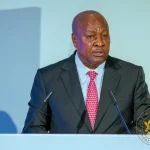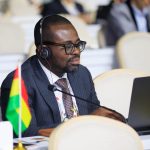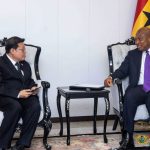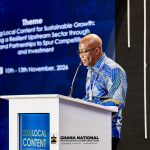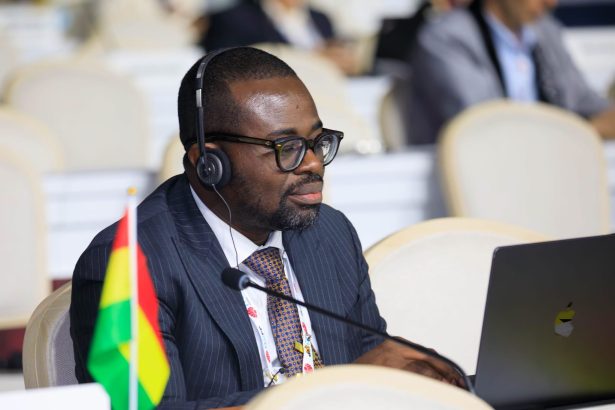
Ghana has presented the Director-General of the National Communications Authority (NCA), Rev. Ing. Edmund Yirenkyi Fianko, as its candidate for election to the Radio Regulations Board (RRB) of the International Telecommunication Union (ITU).
The country is also seeking re-election to the ITU Council at the organisation’s 2026 Plenipotentiary Conference in Doha, Qatar, scheduled for November 9 to 27.
Ghana’s candidature for the Radio Regulations Board is intended to secure representation in decisions concerning the international management of radio-frequency spectrum and satellite orbits.
The board is responsible for overseeing the application and interpretation of the Radio Regulations, which provide the framework for the use of these shared resources.
Alongside Fianko’s candidature, Ghana is campaigning to retain its position on the ITU Council, the body responsible for overseeing the Union’s activities between plenipotentiary conferences.
More Read
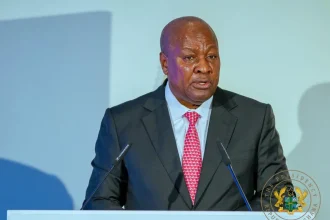
The conference, which is the ITU’s highest policy-making body, is convened every four years to establish the organisation’s general policies, approve its four-year strategic and financial plans and elect its leadership and governing bodies.
A total of 48 member states will be elected to serve on the Council, while 12 members will be chosen for the Radio Regulations Board.
Ghana says its campaign draws on its experience and contributions to the ITU, as well as its commitment to universal connectivity, digital inclusion, cybersecurity and the development of digital skills.
Addressing the opening of the conference, ITU Secretary-General Doreen Bogdan-Martin said the decisions taken by member states would influence the digital future for generations.
She pointed to the contrast between rapid technological advances and the millions of people still without internet access, calling for stronger international cooperation to ensure that digital development is inclusive.
The conference is expected to provide member states with an opportunity to determine the ITU’s priorities and direction amid rapid changes in global telecommunications and emerging technologies.