

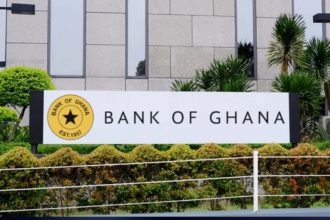
The Bank of Ghana has maintained its Monetary Policy Rate at 14 percent following the conclusion of its 130th Monetary Policy Committee meeting held from May 18 to 20, 2026, as policymakers weigh rising global risks against signs of domestic economic resilience.
The decision reflects the committee’s assessment that risks to inflation and economic growth remain broadly balanced, despite heightened global uncertainty linked to ongoing geopolitical tensions in the Middle East.
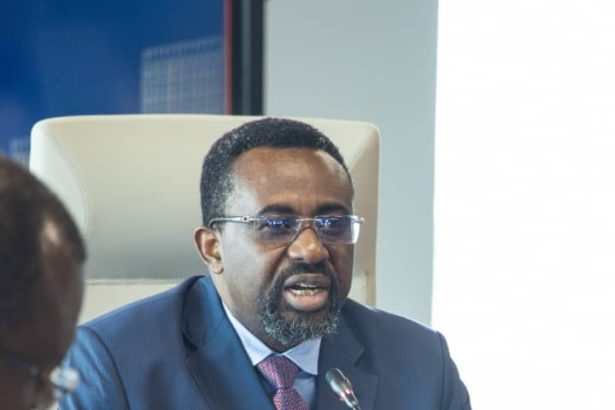
The Governor of the Bank of Ghana indicated that the conflict has disrupted global trade flows, pushed up crude oil prices and renewed inflationary pressures across both advanced and emerging economies.
The International Monetary Fund has consequently revised its 2026 global growth forecast downward from 3.3 percent to 3.1 percent.
Domestically, the bank noted continued economic expansion in the first quarter of 2026, with the Composite Index of Economic Activity rising by 12.6 percent in March compared to 2.3 percent in the same period last year.
Inflation, however, recorded a marginal increase, edging up to 3.4 percent in April from 3.2 percent in March, marking the first rise since December 2024.
The uptick was driven mainly by non-food inflation, although core inflation continued to decline over the period.
The committee expects inflation to gradually move into the medium-term target band, influenced by exchange rate movements, food supply conditions and transport fare adjustments.
It also cautioned that prolonged geopolitical tensions could keep crude oil prices above US$100 per barrel, with potential spillover effects on transport and utility prices in Ghana.
Despite the risks, the bank maintained that strong reserve buffers, relative exchange rate stability and ongoing fiscal discipline are expected to help contain inflationary pressures in the coming months.
The next monetary policy committee meeting is scheduled for July 20 to 22, 2026.